15 hr
Private Luxor Day Tour from Cairo with Flights
- Private experience
- Personal attention
- Premium amenities
- Free cancellation
Day Trip to Luxor from Cairo — Pharaonic Heritage by Air
Fly south to Thebes, walk among colossi and royal tombs
Compare fares, pick the fit — all bookings are mobile-voucher and eligible for free cancellation where shown.
15 hr
14 hr
24 hr
| Experience | From | Duration | Rating | Transfers | Pickup | Skip-the-line | Price | |
|---|---|---|---|---|---|---|---|---|
|
Luxury / Private
Most popular
Private Luxor Day Tour from Cairo with Flights
|
Cairo | 15 hr | ★ 4.5 | ✓ | ✓ | ✓ | €383 | Book → |
|
Guided Experience
Luxor Day Trip with Hot Air Balloon Flight from Cairo
|
Cairo | 14 hr | ★ 4.4 | ✓ | ✓ | ✓ | €474 | Book → |
|
Guided Experience
Luxor Temples & Tombs Full-Day Flight Tour from Cairo
|
Cairo | 24 hr | ★ 5.0 | ✓ | ✓ | ✓ | €352 | Book → |
Worth it for history enthusiasts with stamina
A day trip to Luxor from Cairo demands serious commitment—roughly 10 hours of travel by air for 6–8 hours exploring the West Bank necropolis, Karnak Temple, and Luxor Temple. The 500 EGP conservation fee per person covers entry to Luxor's archaeological zones, but flights typically run 3,000–5,000 EGP return, pushing the total cost north of 3,500 EGP before guides or meals. What you gain is access to the Valley of the Kings, Hatshepsut's mortuary temple, and the colossal hypostyle hall at Karnak—monuments that define ancient Thebes. For travelers prioritizing pharaonic Egypt over Islamic Cairo or Mediterranean resorts, the expense translates into irreplaceable encounters with tomb paintings and hieroglyphic inscriptions. Casual sightseers may find the travel-to-visit ratio punishing; dedicated antiquities fans will consider it the highlight of their Egypt itinerary. Day trip to Luxor from Cairo tours compress centuries of history into a single exhausting day.
Bottom line: If pharaonic archaeology justifies the cost and fatigue, few single-day excursions in Egypt rival Luxor's historical density.
Hand-picked experiences loved by thousands of travelers
4 days
Free Cancellation
Glide down the Nile on a luxury cruise, explore ancient temples, and soar over Luxor at sunrise.
8 days
Free Cancellation
Explore Egypt's wonders from the Pyramids to Abu Simbel with private guide, Nile cruise & flights
3 days
Free Cancellation
Three-day journey to Egypt's ancient capital with overnight rail travel, expert-guided temple tours, and Valley of the Kings exploration
2 days
Free Cancellation
Fly to Luxor for an immersive overnight adventure exploring ancient temples, royal tombs, and monuments.
2 days
Free Cancellation
Private overnight journey from Cairo to Luxor including ancient temples, Valley of the Kings, and sunrise balloon flight
8 hours
Free Cancellation
Fly to Luxor for a full-day exploration of ancient temples, royal tombs, and pharaonic monuments
4 days
Free Cancellation
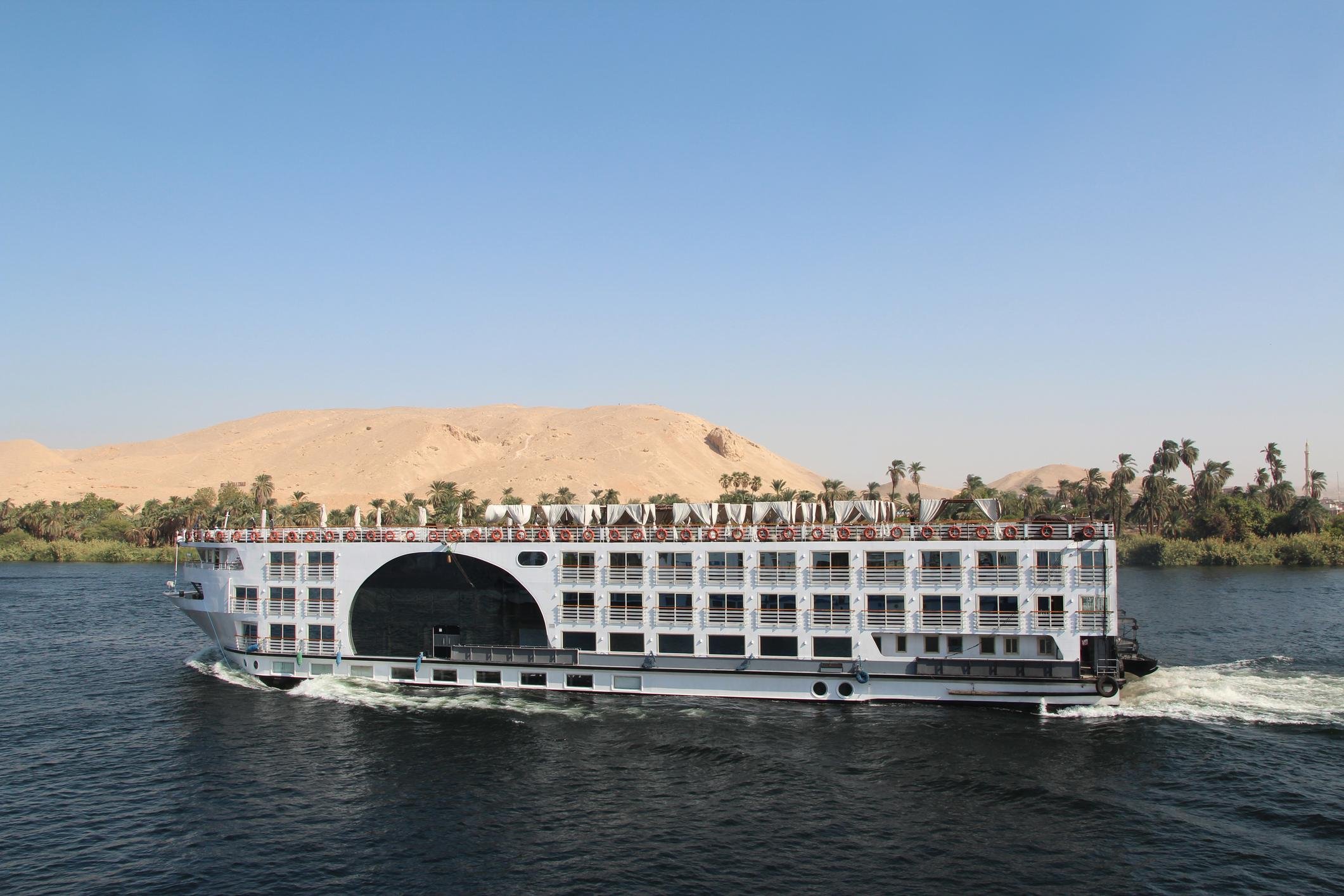
Sail the Nile in 5-star comfort while exploring ancient temples, tombs, and monuments with an expert guide
8 hours 30 minutes
Free Cancellation
Relax in a modern, climate-controlled vehicle as a professional driver takes you from Cairo to Luxor.
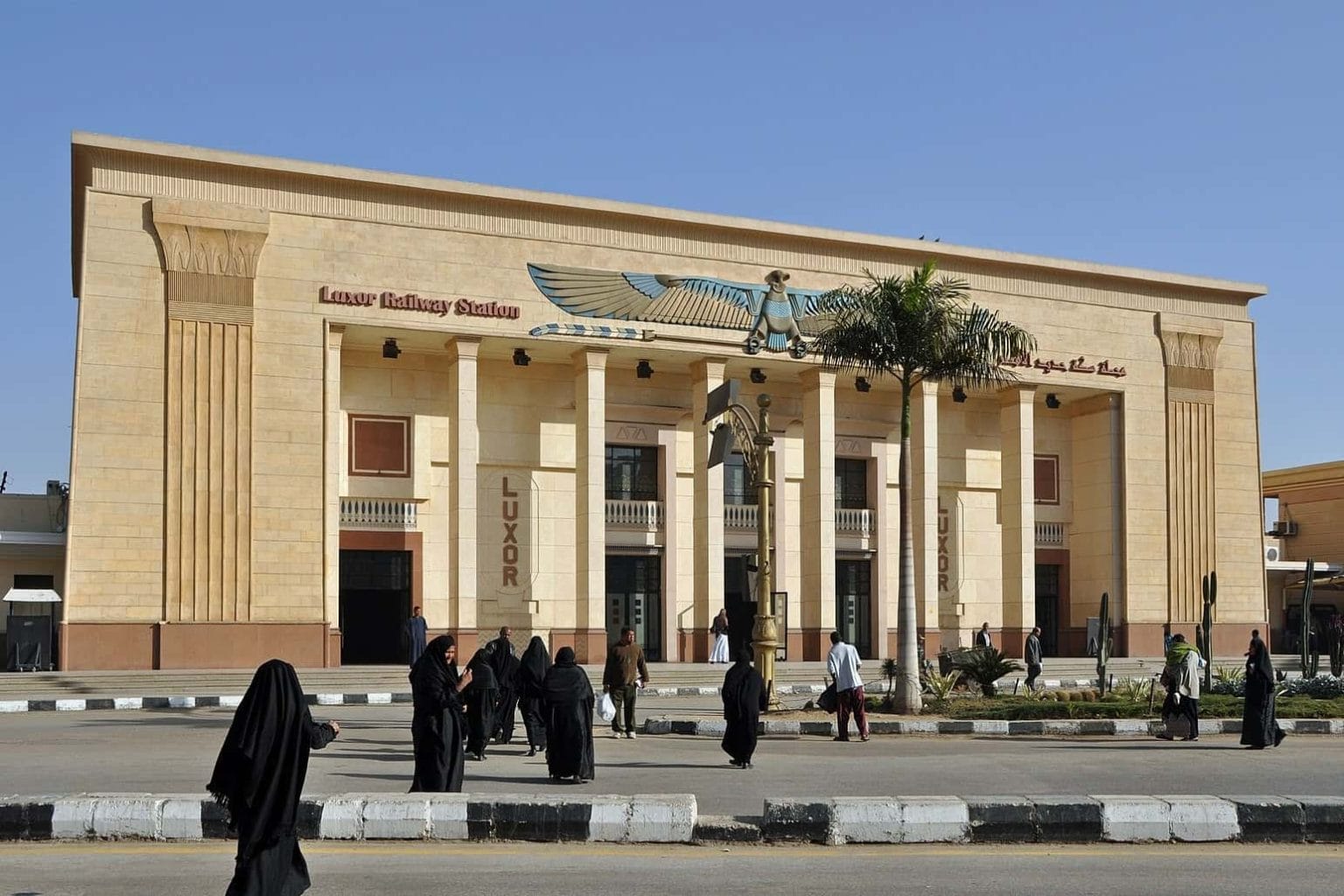
Arrive in Luxor via morning flight from Cairo
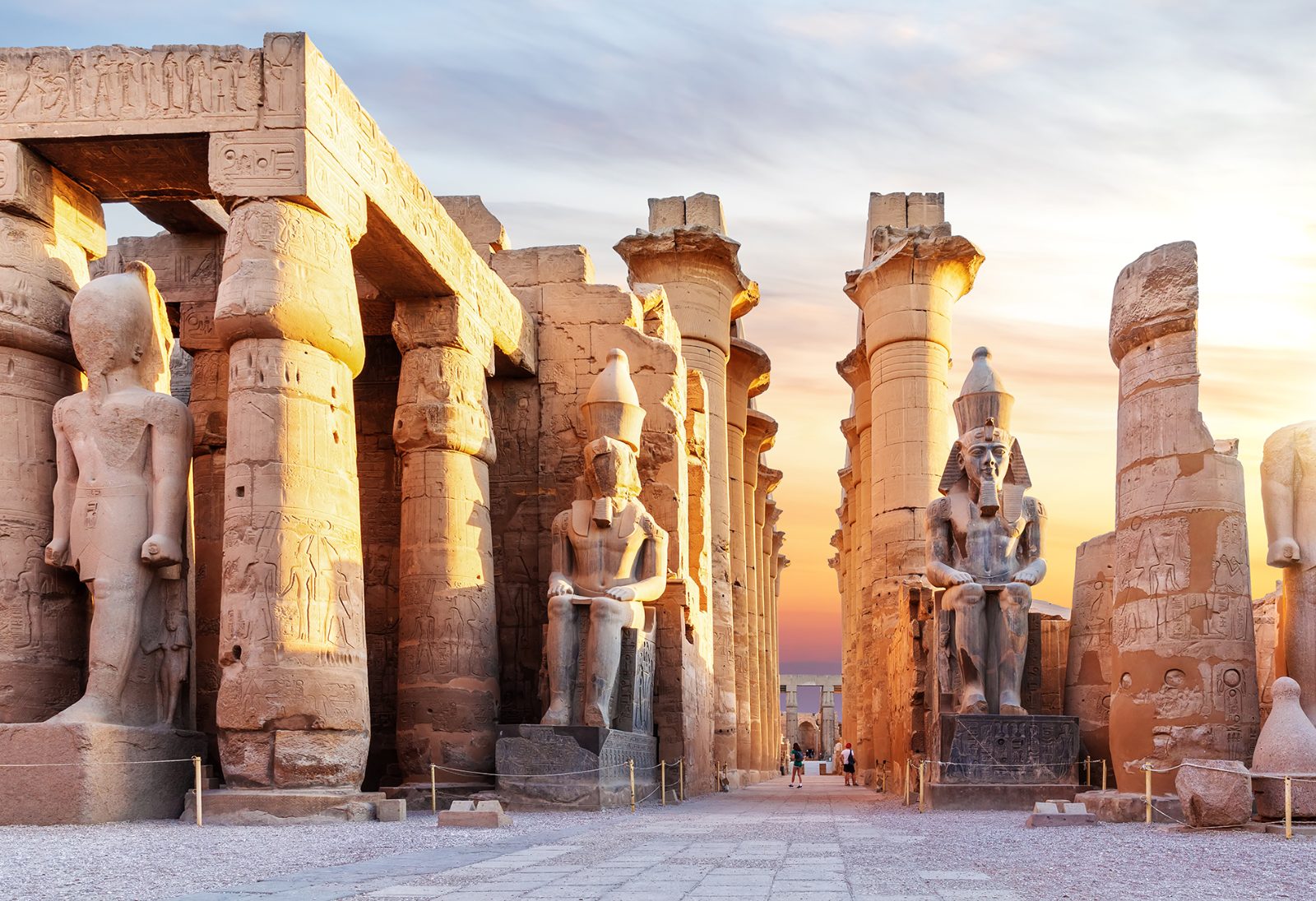
Explore the main structures and colonnades
Observe the site illumination during sunset
Return to transit hub for evening travel
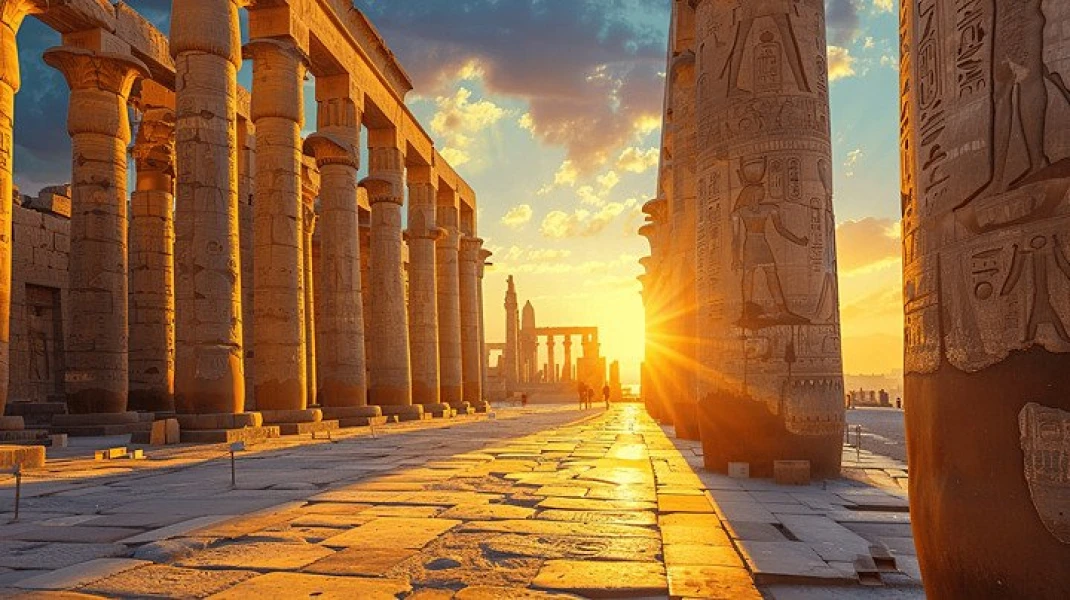
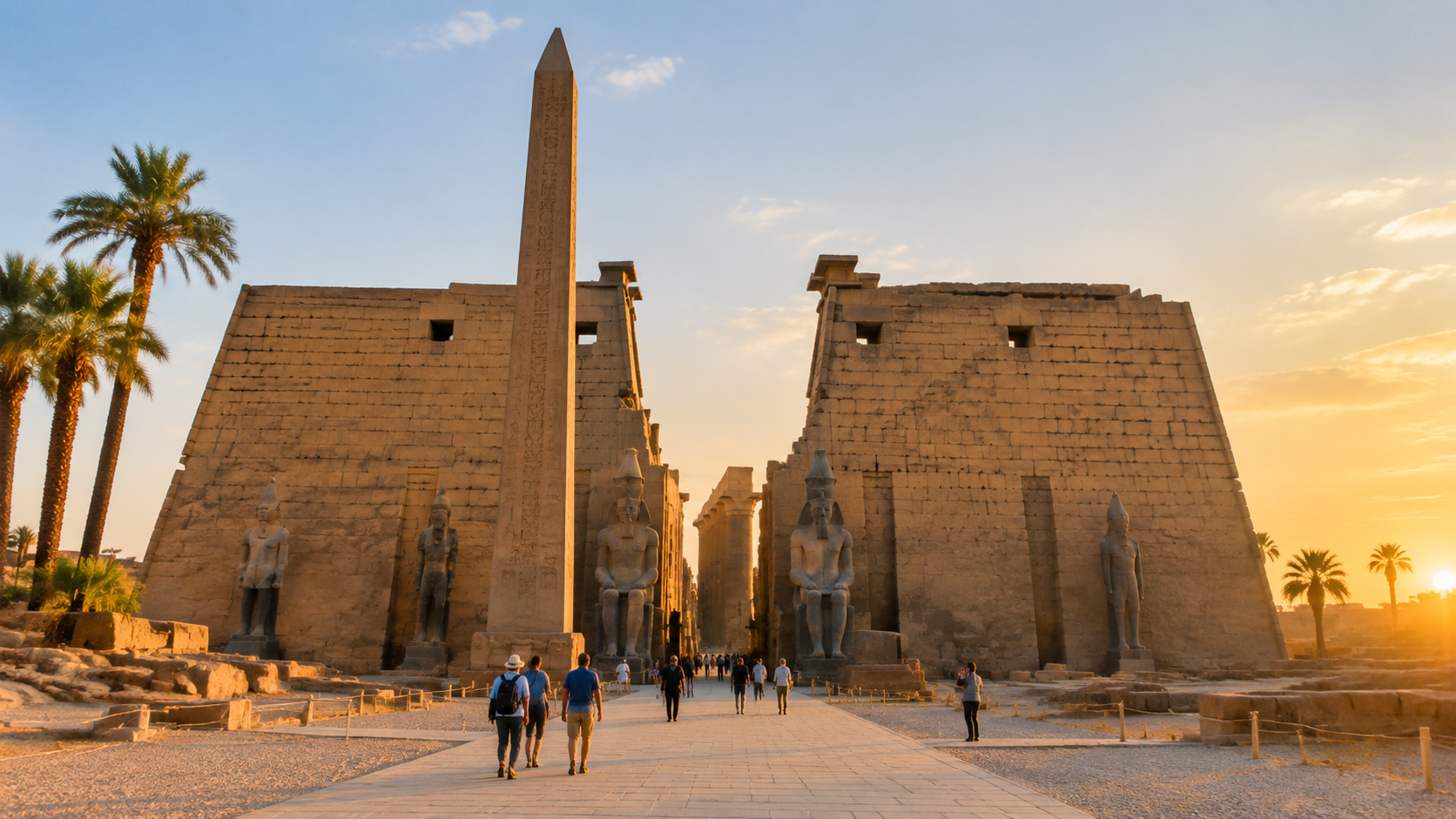
The hall features 14 massive papyrus-capital columns reaching 16 meters in height. It remains one of the most significant architectural feats in the temple complex.
Luxor Temple Columns
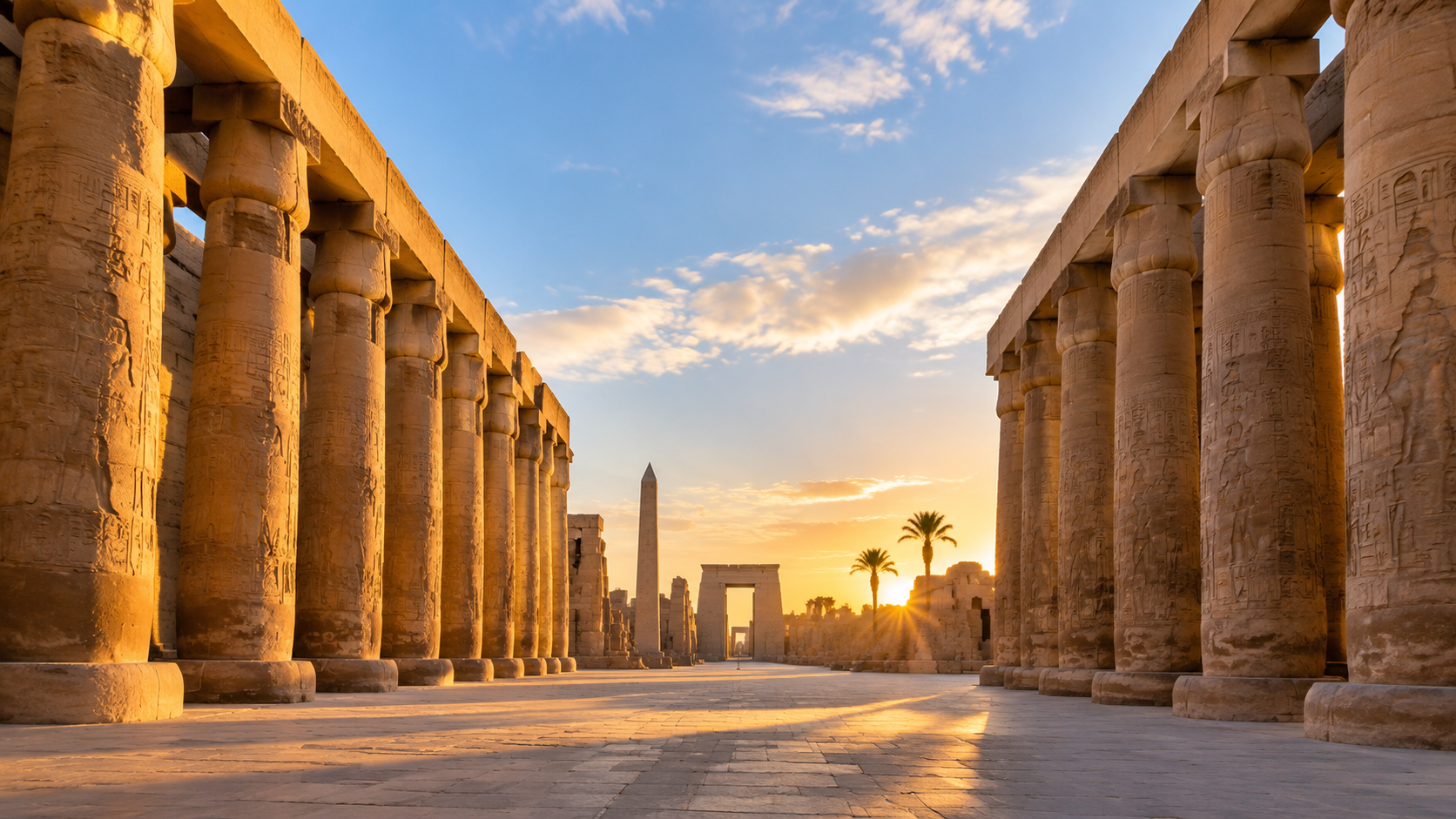
This area consists of three sides of double-row columns surrounding a vast open space. It served as a vital part of the royal festival site.
Amenhotep III court
Part of the greater religious complex, this structure showcases intricate relief carvings. It is dedicated to the ancient moon god.
Khonsu Temple reliefs
This monolithic red granite structure stands as a testament to ancient engineering. It remains remarkably preserved despite its age.
Ramesses II obelisk
These small chapels were designed to house the sacred boats used during religious processions. They provide insight into the ritual life of the pharaohs.
Sun Barque shrine
You board a dawn flight from Cairo, and ninety minutes later the Nile appears below — a green ribbon curving through beige desert. You land at Luxor International, collect your guide, and cross the east bank to Karnak. You enter through the first pylon, pass the Avenue of Sphinxes, and step into the Hypostyle Hall.
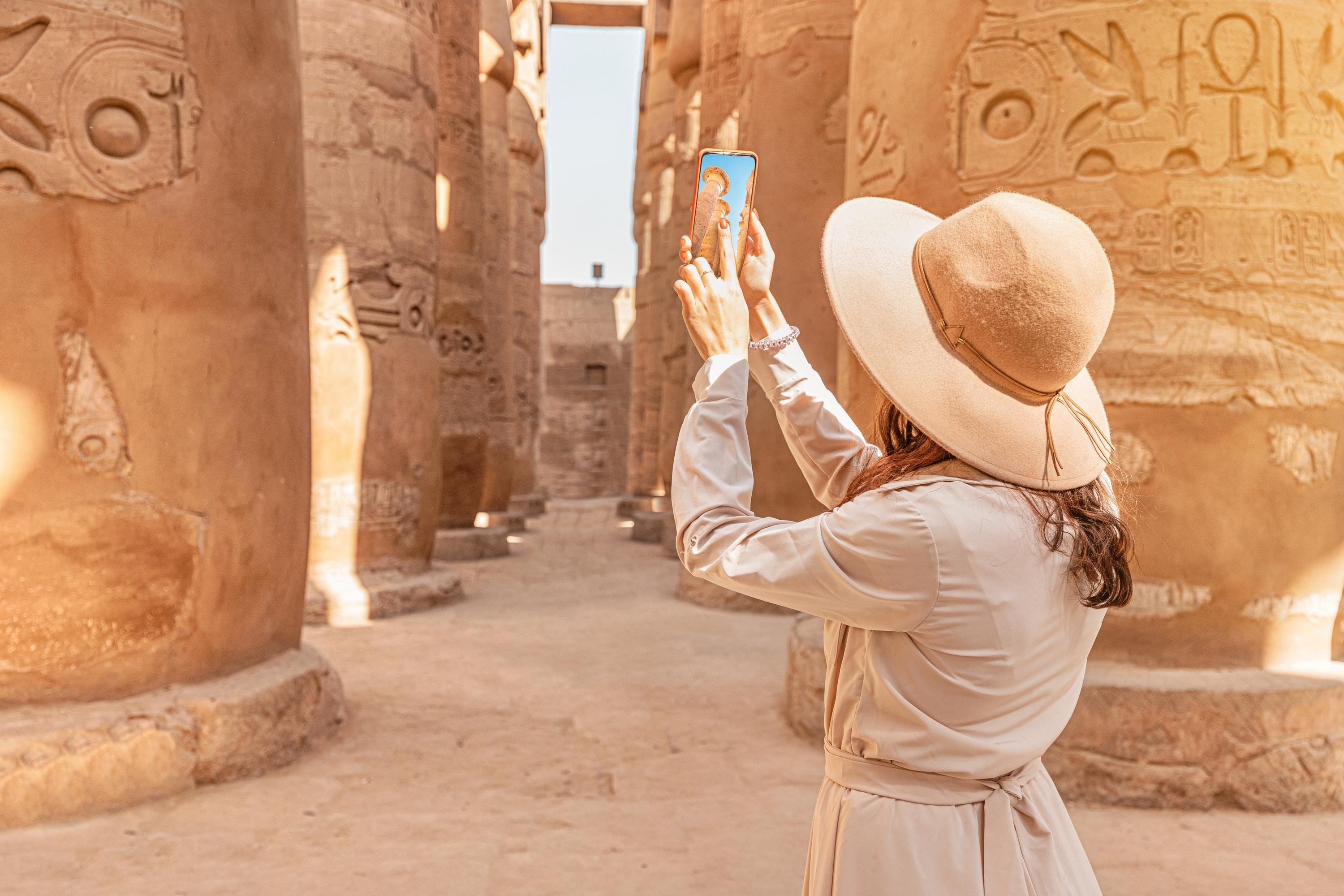
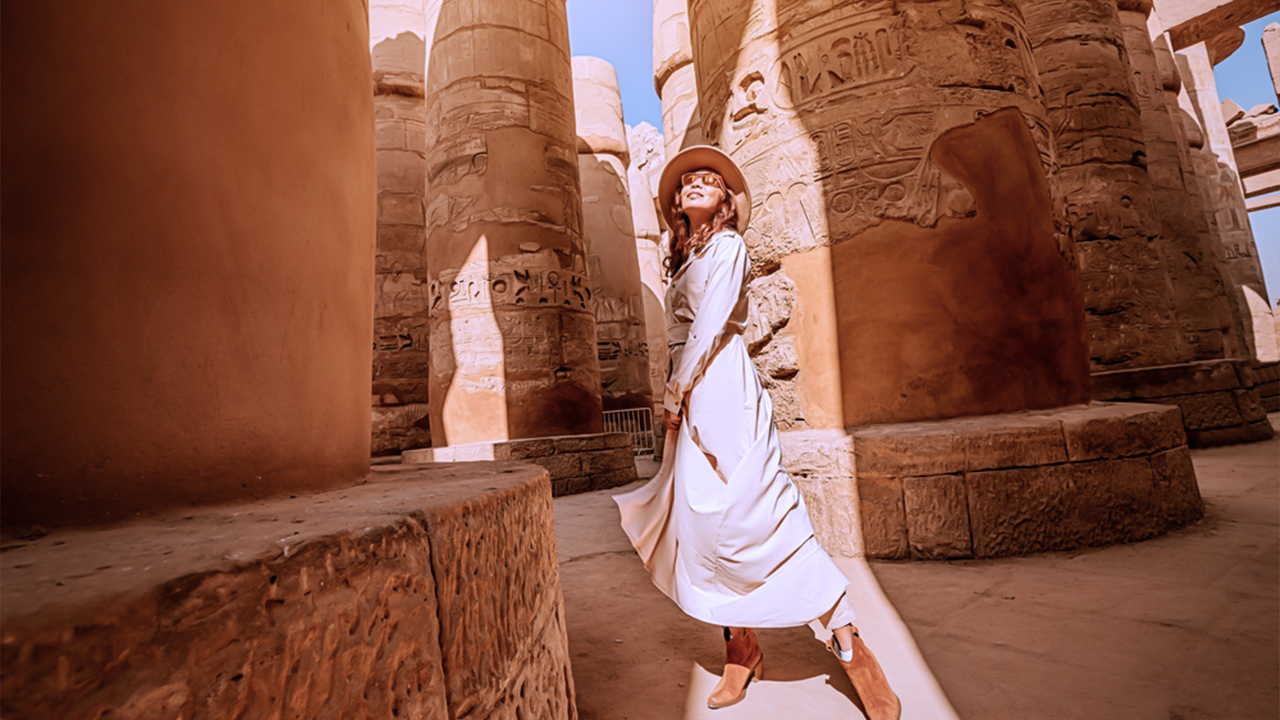
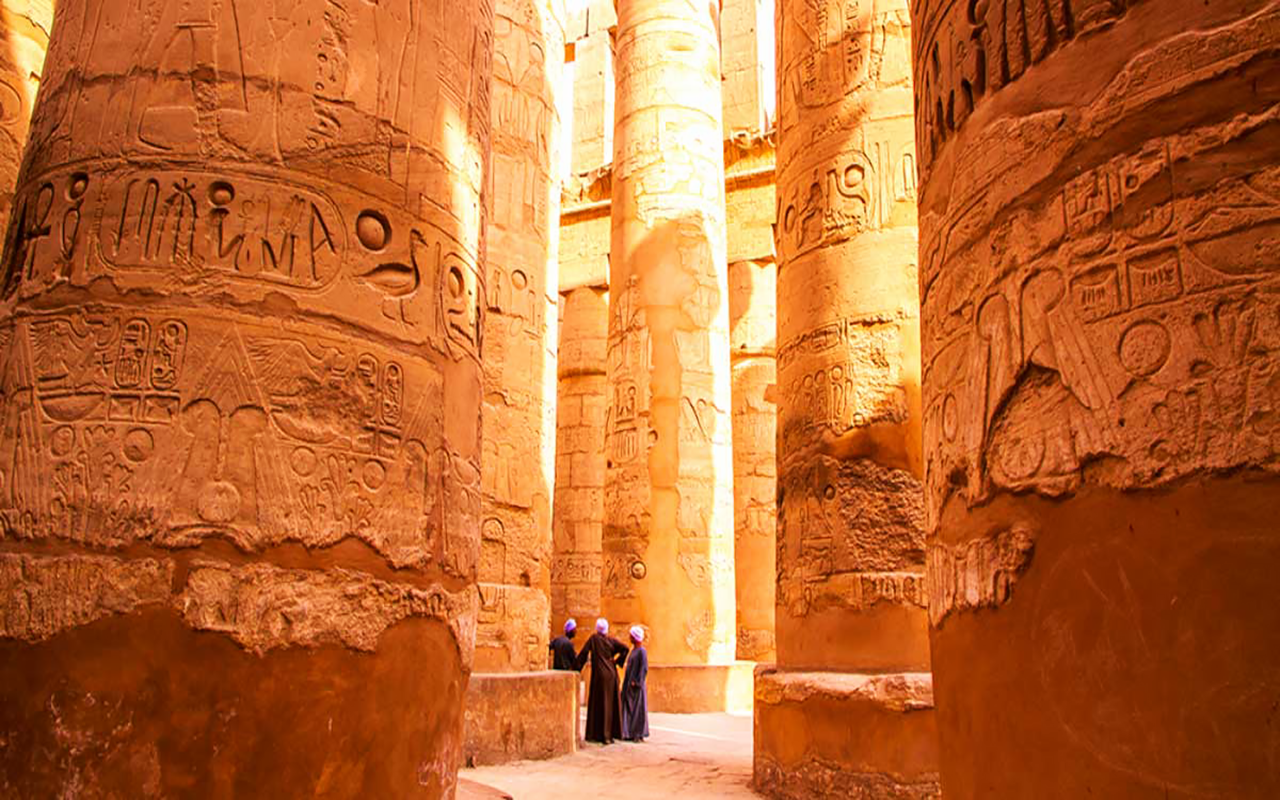
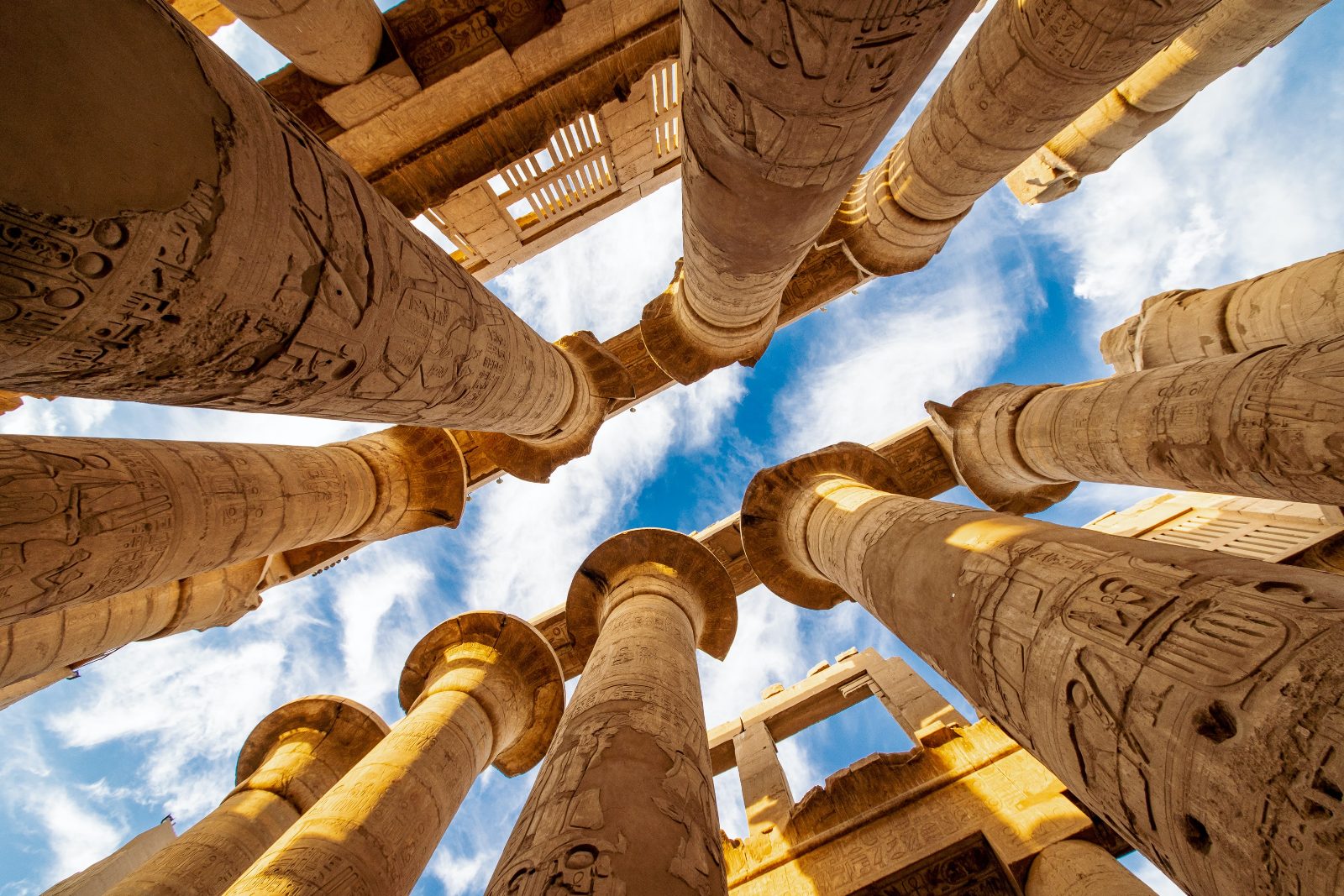
Columns tower overhead, their shafts carved with hieroglyphs you trace with your fingertips. Shafts of light angle through the clerestory, illuminating dust motes and painted cartouches.
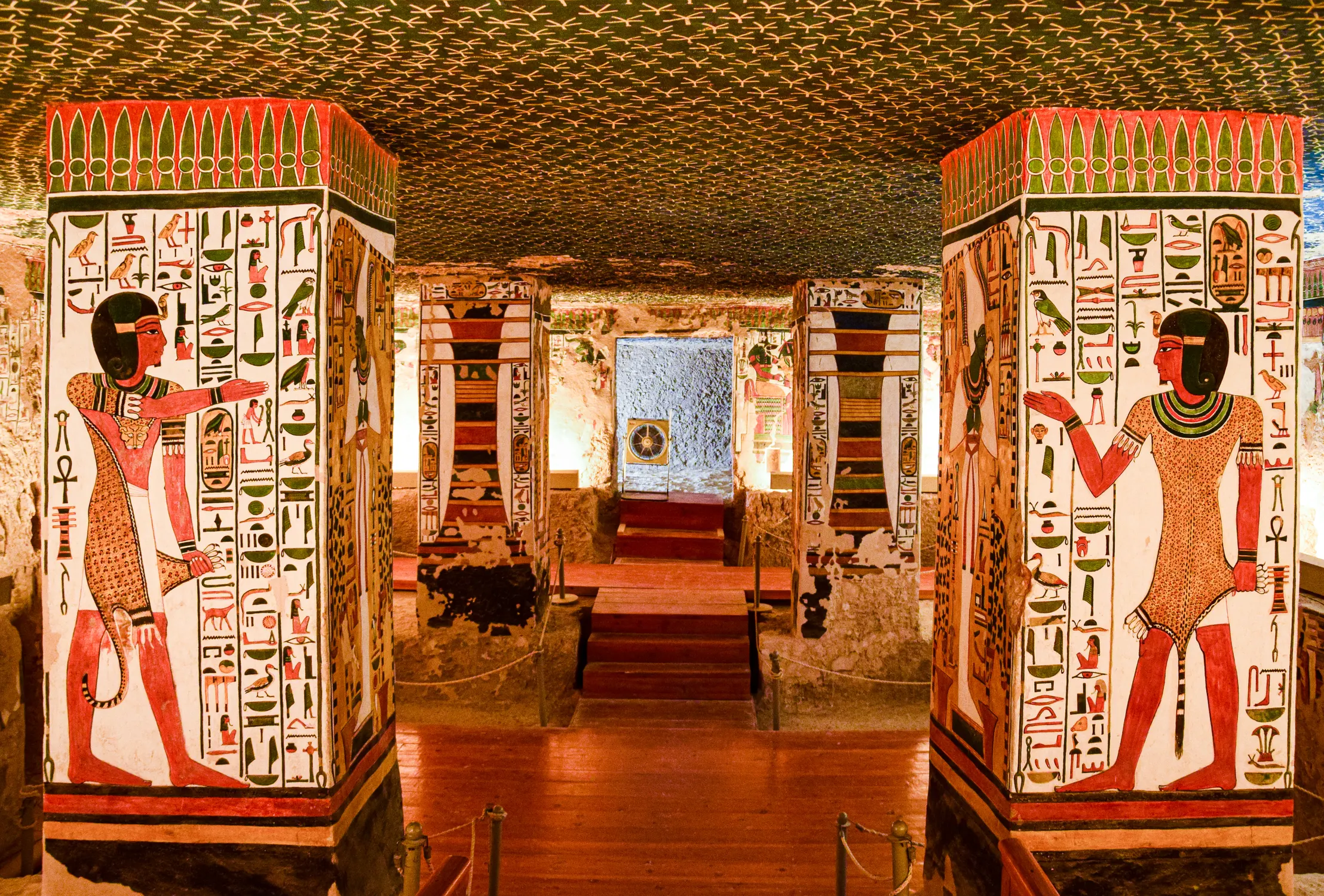
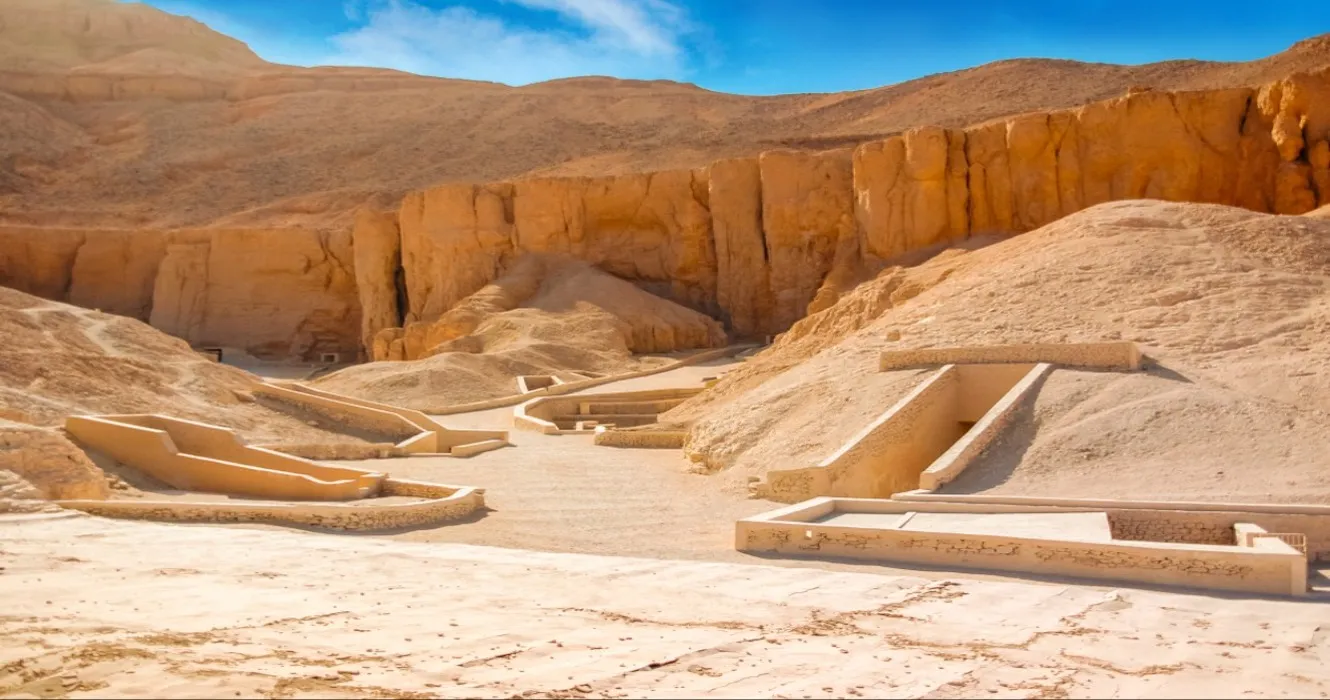
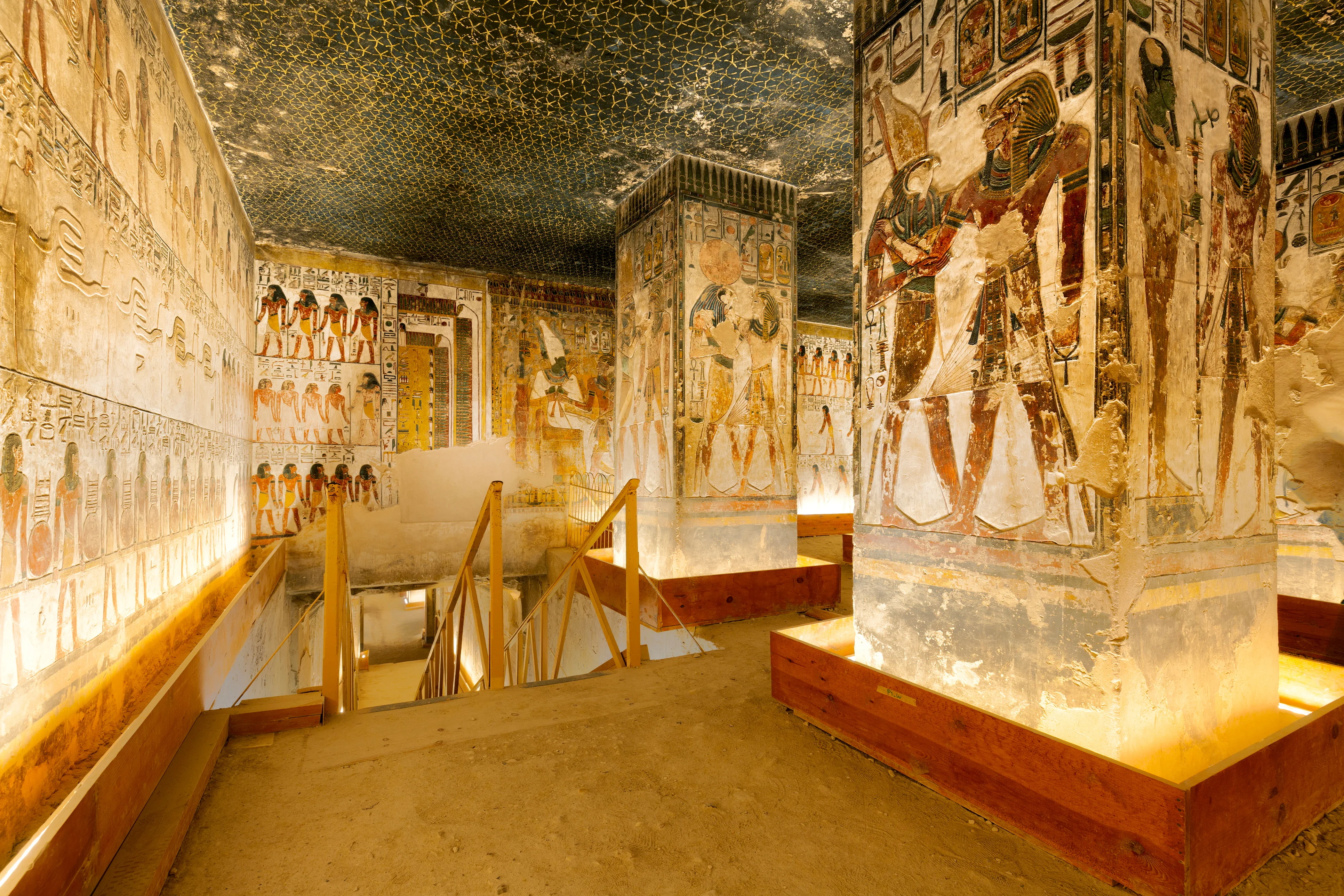
You board a motorboat to cross the Nile, feeling the temple heat give way to the river breeze. On the west bank, your coach climbs into the Theban hills. You descend a sloped corridor into the Valley of the Kings, where tomb walls glow under soft LED arrays — blues, ochres, and golds applied 3,200 years ago. You pause at the sarcophagus chamber, reading the Book of the Dead excerpts that line the ceiling.
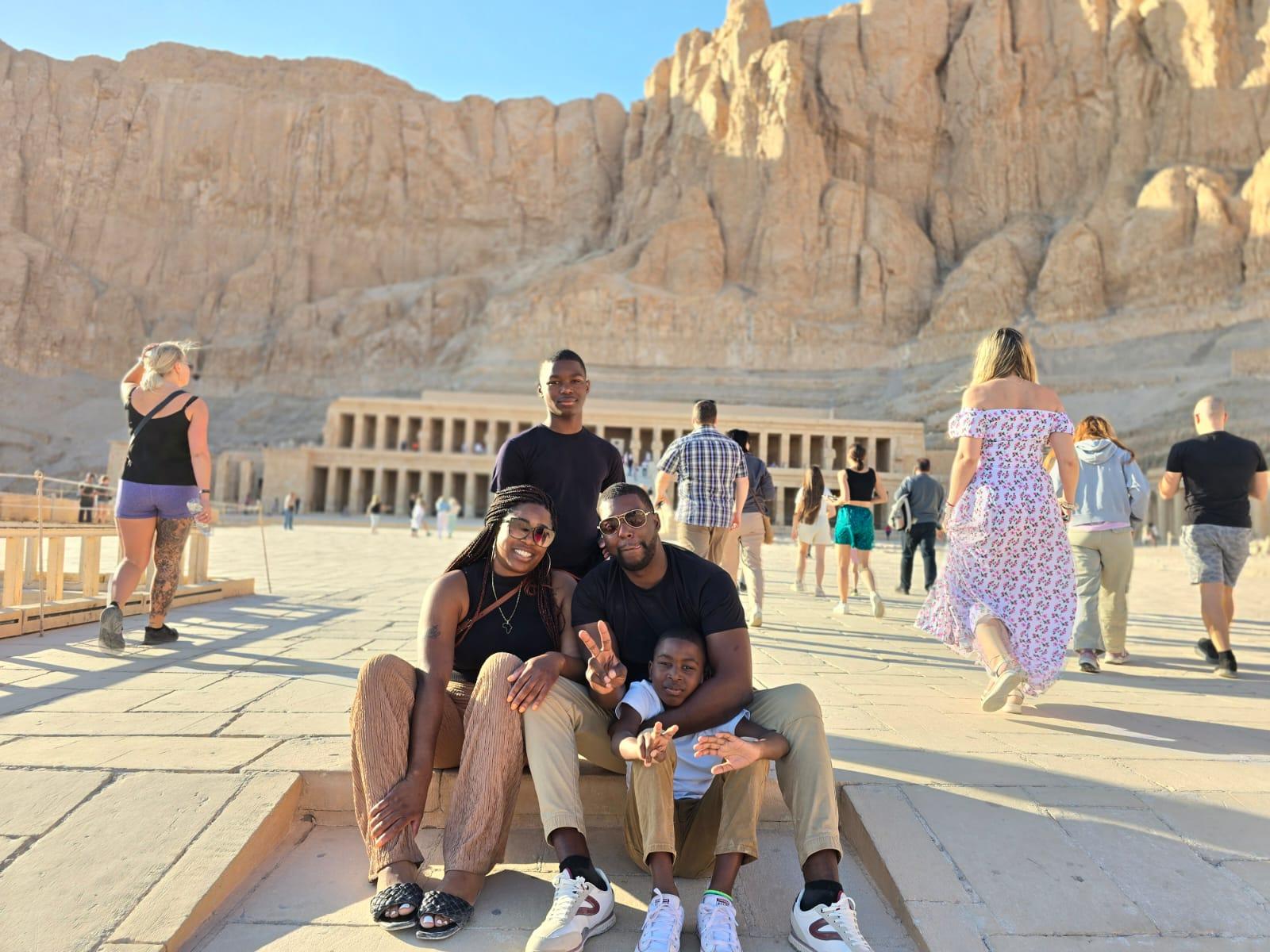
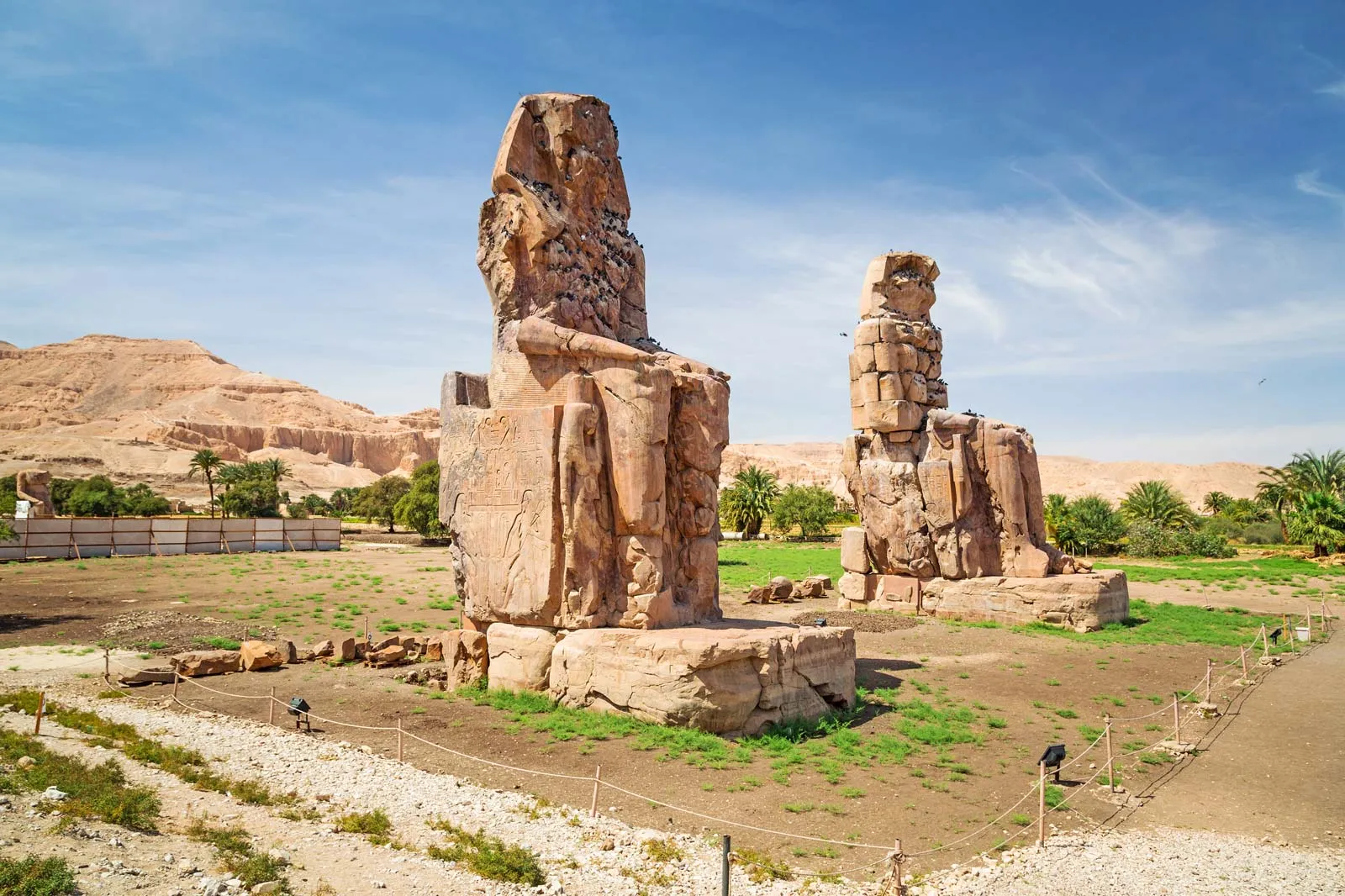
You ascend to Deir el-Bahari, where Hatshepsut's terraces rise in geometric tiers. You walk the colonnaded ramps, pause at the Punt Colonnade, and look east across the floodplain to Karnak's distant pylons. The Colossi of Memnon loom on your return route — you stand at the base of the southern statue, craning upward at Amenhotep's weathered face. By evening you are airborne again, the Theban cliffs receding as Cairo's lights multiply ahead.
All the details about your upcoming adventure in one place
A day trip to Luxor from Cairo covers approximately 650 kilometers each way, typically via domestic flight or overnight train, bringing visitors to the ancient capital of Thebes. The itinerary includes Karnak Temple, Valley of the Kings, and Hatshepsut's mortuary temple on both the East and West Banks of the Nile. Day trip to Luxor from Cairo tours depart before dawn to maximize time at the archaeological sites before returning the same evening.
Luxor sits on the site of Thebes, capital of Egypt's New Kingdom from 1550 to 1070 BCE and spiritual heart of the empire that stretched from Nubia to the Euphrates.
The city preserves the largest concentration of pharaonic monuments on earth — temple precincts that consumed generations of labor, royal tombs carved into limestone cliffs, and statuary workshops that supplied the ancient world. A day trip to Luxor from Cairo bridges 670 kilometers and three millennia, compressing the journey that once took scribes and tribute caravans weeks into a ninety-minute flight.
The east bank monuments — Karnak and Luxor temples — commanded the skyline of living Thebes. Karnak's Great Hypostyle Hall alone covers 5,000 square meters and supports 134 sandstone columns, the tallest rising 21 meters and capped with capitals wide enough to hold fifty standing men. Construction spanned sixteen pharaohs. Reliefs document military campaigns, divine genealogies, and the theological synthesis that elevated Amun-Ra above all other gods. The Sacred Lake, still fed by groundwater, supplied purification rituals and housed the temple geese whose honking was believed to ward off chaos.
Across the Nile, the west bank — ancient Ta-Set, "the land of truth" — holds the Theban Necropolis. The Valley of the Kings conceals 63 documented tombs, including Tutankhamun's four-chambered suite discovered intact in 1922 with 5,398 objects. Hatshepsut's mortuary temple at Deir el-Bahari ascends three colonnaded terraces against the Theban cliffs, its pylons aligned with the winter solstice sunrise. The Colossi of Memnon, twin quartzite statues weighing 720 tons each, once flanked the entrance to Amenhotep III's now-vanished temple — the largest mortuary complex ever built in Egypt.
Day tour to Luxor from Cairo itineraries typically allocate two hours for Karnak, ninety minutes for the Valley of the Kings, and one hour at Hatshepsut's temple, with Nile crossings by motorboat and west bank transfers in air-conditioned coaches. The 500 EGP conservation fee grants access to the major sites; specialized tombs and the mummification museum require separate tickets. Luxor's open hours — 06:00 to 19:00 daily — allow early arrivals to photograph the temples in clean morning light and late-afternoon visitors to see Karnak's columns glow amber before sunset.

Karnak's Great Hypostyle Hall supports 134 sandstone columns, the tallest rising 21 meters and capped with capitals wide enough to hold fifty standing men.
Visitors should wear modest clothing that covers shoulders and knees to respect local customs at this Luxor landmark. Comfortable walking shoes are required for navigating the ancient stone pathways.
All bags are subject to inspection upon entry to ensure the safety of the site. Large luggage should be left at your hotel or transport vehicle as storage is not provided.
Handheld photography is permitted for personal use throughout the grounds. Professional equipment, including tripods and drones, requires prior authorization from the Ministry of Tourism and Antiquities.
The site is open to all ages, though strollers may be difficult to maneuver on sand. Keep children close as there are many open excavations and unrailed areas.
Portions of the site feature uneven sandy or stone terrain that may be challenging for wheelchair users. Visitors are encouraged to explore the central areas which are more accessible by paved walkways.
Outside food is not permitted within the temple complexes. Bottled water is recommended to maintain hydration during your day trip to luxor from cairo.
Opening hours
06:00–19:00
Address
Luxor City, Luxor Governorate, Egypt
Entry
500 EGP conservation fee per person
Best arrival window
06:00–18:00
Storage
Not available at site
Air · Fastest transit
Domestic flights from Cairo to Luxor Airport take approximately one hour.
Train · Budget-friendly
Express trains run from Cairo to Luxor station in roughly 9 to 10 hours.
Car · Custom schedule
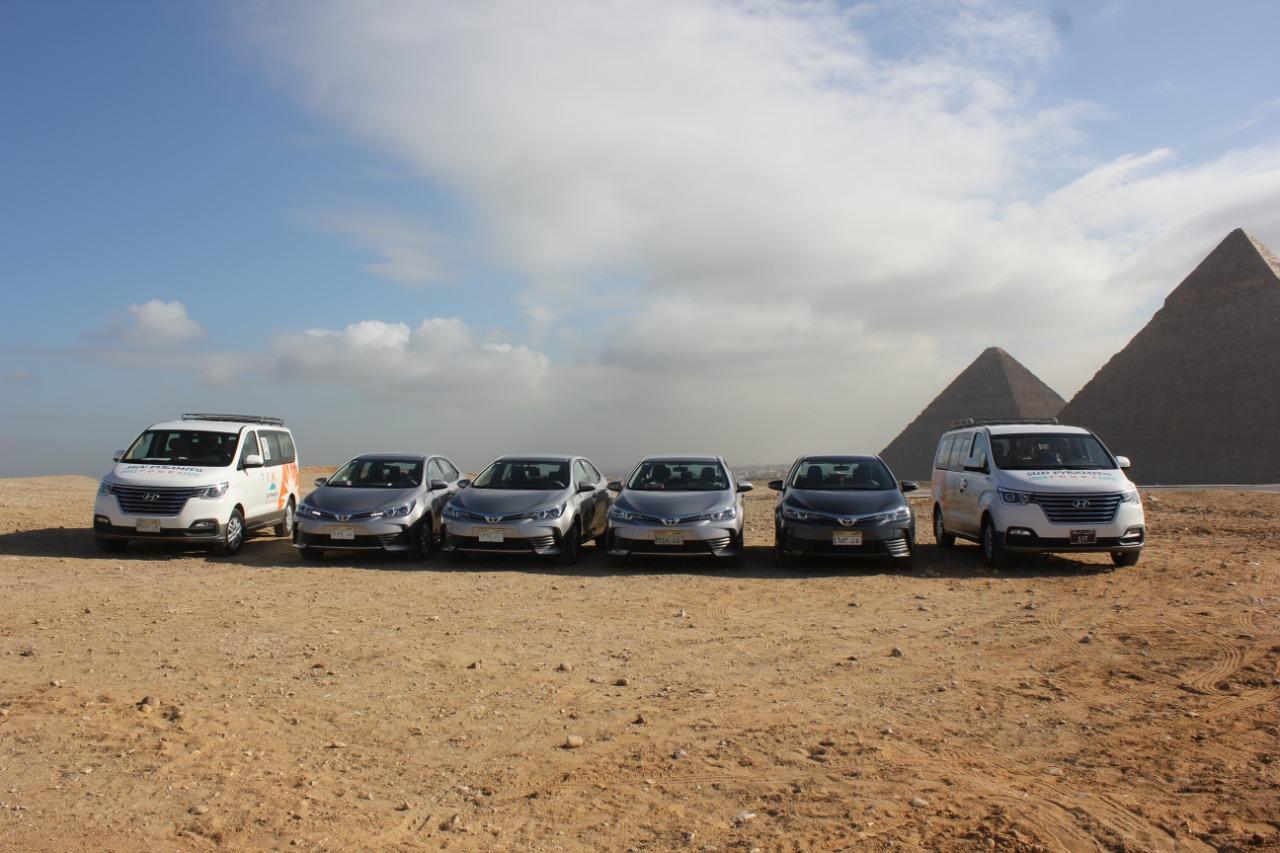
Private transfers provide flexibility for a full day trip to luxor from cairo tour.
Full refunds are typically provided if requested at least 24 hours before the scheduled activity. Cancellations made within this window may forfeit the 500 EGP conservation fee per person.
Recommended time
3-4 hours
When planning a day trip to luxor from cairo, allocating at least three hours allows for a thorough exploration of the columns and sanctuary. Those booking day trip to luxor from cairo tours often find that arriving early helps navigate the pylon gates before the arrival of large groups. If you prioritize detailed observation of the sandstone hieroglyphs, consider securing your day trip to luxor from cairo tickets in advance to minimize time at the entrance.
Crowd levels through the day
Weather · crowds · average price — dots go green to amber to red as each metric rises.
September to November offers milder temperatures perfect for walking between ruins. This season provides clear skies for photography at this Luxor landmark.
December to February is the peak season with cool, comfortable weather. Expect larger crowds during these months for a day trip to luxor from cairo.
March to May features pleasant morning temperatures before the heat increases. It is a suitable time to avoid the summer peak heat.
June to August brings extreme heat which limits comfortable exploration hours. Mid-day visits are discouraged during this time.
Drink plenty of water throughout your day trip to luxor from cairo to counter the desert heat. Refillable bottles are essential as temperatures rise quickly.
Aim to start your day trip to luxor from cairo tours as early as 06:00 to experience the cooler morning hours. This avoids the bulk of the afternoon crowds.
Consider hiring a licensed local guide to explain the complex history behind the ruins. They provide context that enhances the value of your day trip to luxor from cairo.
Carry small denominations of EGP for incidental costs, though your primary entrance fee is 500 EGP. Digital payments are becoming more common, but cash remains standard.
Apply high-SPF sunscreen and wear a wide-brimmed hat. The exposure to direct sun is significant during any day trip to luxor from cairo.
Luxor occupies the site of ancient Thebes, a settlement that rose to prominence around 2100 BCE when Mentuhotep II reunified Egypt and established it as the capital of the Middle Kingdom. The city's transformation into a religious and political powerhouse accelerated during the New Kingdom, beginning in 1550 BCE. Pharaohs of the Eighteenth Dynasty, including Hatshepsut and Thutmose III, expanded the Karnak Temple complex into the largest religious structure ever built, dedicating it to the Theban triad of Amun, Mut, and Khonsu. Luxor Temple, constructed by Amenhotep III around 1390 BCE and later expanded by Ramesses II, served as the setting for the annual Opet Festival, when sacred barges carried divine statues along a ceremonial avenue linking the two temple complexes. The Valley of the Kings emerged as the royal necropolis after 1500 BCE, when Thutmose I abandoned pyramid construction in favor of hidden rock-cut tombs. Over the next five centuries, sixty-three tombs were carved into the limestone hills, including the burial chamber of Tutankhamun, discovered intact by Howard Carter in 1922. That find revealed the scale of wealth and artistry invested in royal burials, despite Tutankhamun's minor reign. The discovery sparked global interest in Egyptology and positioned day trip to luxor from cairo itineraries as essential components of modern heritage tourism. Across the Nile, the Valley of the Queens and nobles' tombs at Deir el-Medina documented the lives of workers who built the royal monuments. Thebes declined after the Twenty-first Dynasty moved the capital to Tanis around 1070 BCE. Persian, Greek, and Roman occupations followed, with each civilization adapting existing temples rather than erasing them. The Luxor Temple received a Roman fort, and early Christians converted the hypostyle hall into a church. Islamic expansion in 641 CE brought new settlement patterns, and the modern town of Luxor grew directly atop ancient ruins. Systematic archaeological excavation began in the nineteenth century under French and British teams. UNESCO inscribed the Theban Necropolis as a World Heritage Site in 1979, recognizing the concentration of monuments that now anchor day trip to luxor from cairo tours and validate the conservation fee visitors pay to access these layered histories.
Mentuhotep II reunifies Egypt and establishes Thebes as the capital of the Middle Kingdom
New Kingdom begins, launching Thebes into its golden age as a religious and political center
Amenhotep III constructs Luxor Temple, later expanded by Ramesses II with colossal statues and pylons
Valley of the Kings serves as royal necropolis, with sixty-three tombs carved into the western cliffs
Howard Carter discovers Tutankhamun's intact tomb, igniting worldwide fascination with ancient Egypt
UNESCO designates the Theban Necropolis a World Heritage Site, protecting monuments across both banks of the Nile
Stand between the massive papyrus-shaped columns to capture the scale of the stone pillars and light filtering through the roof slabs. This area of the Karnak complex offers high-contrast architectural geometry.
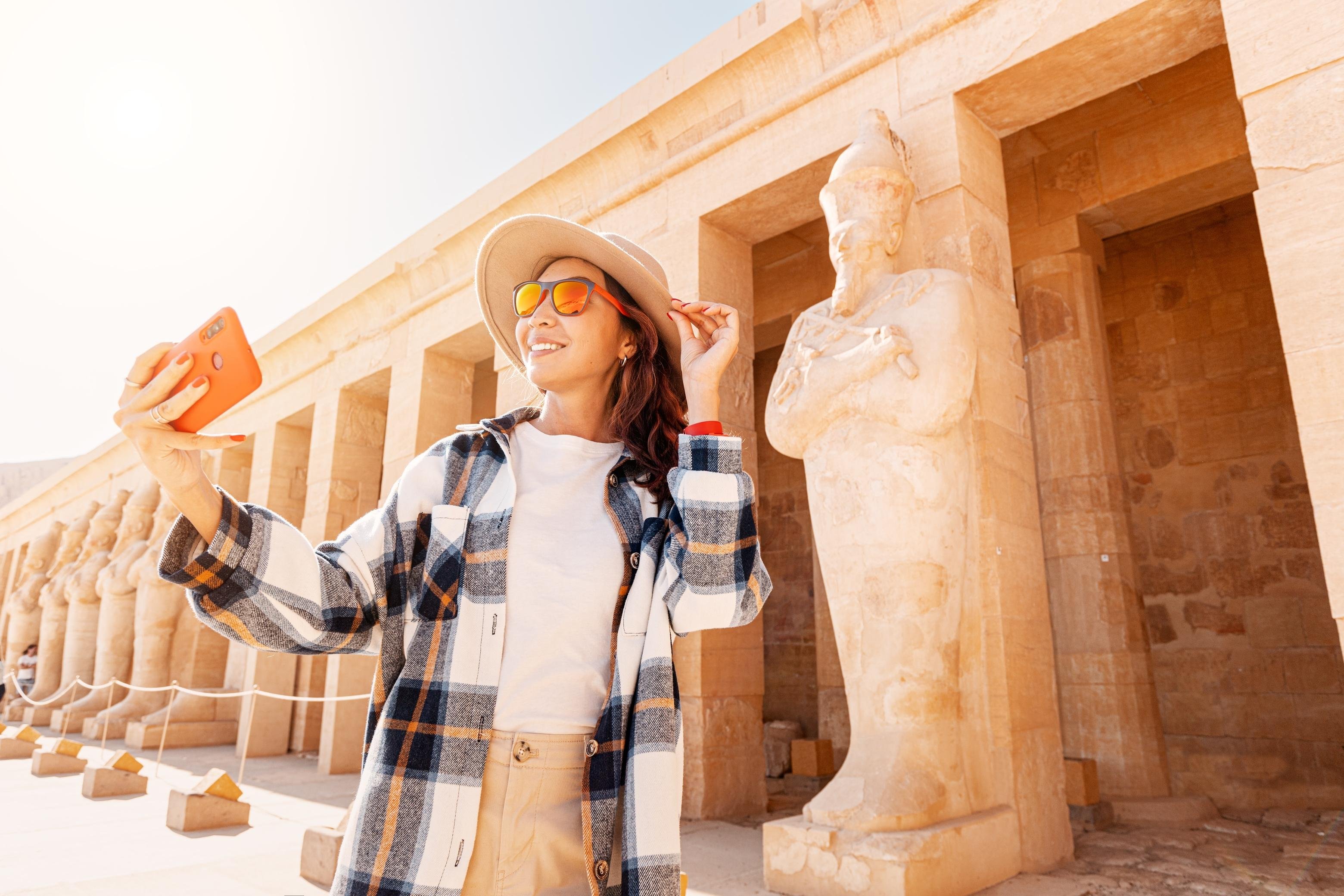
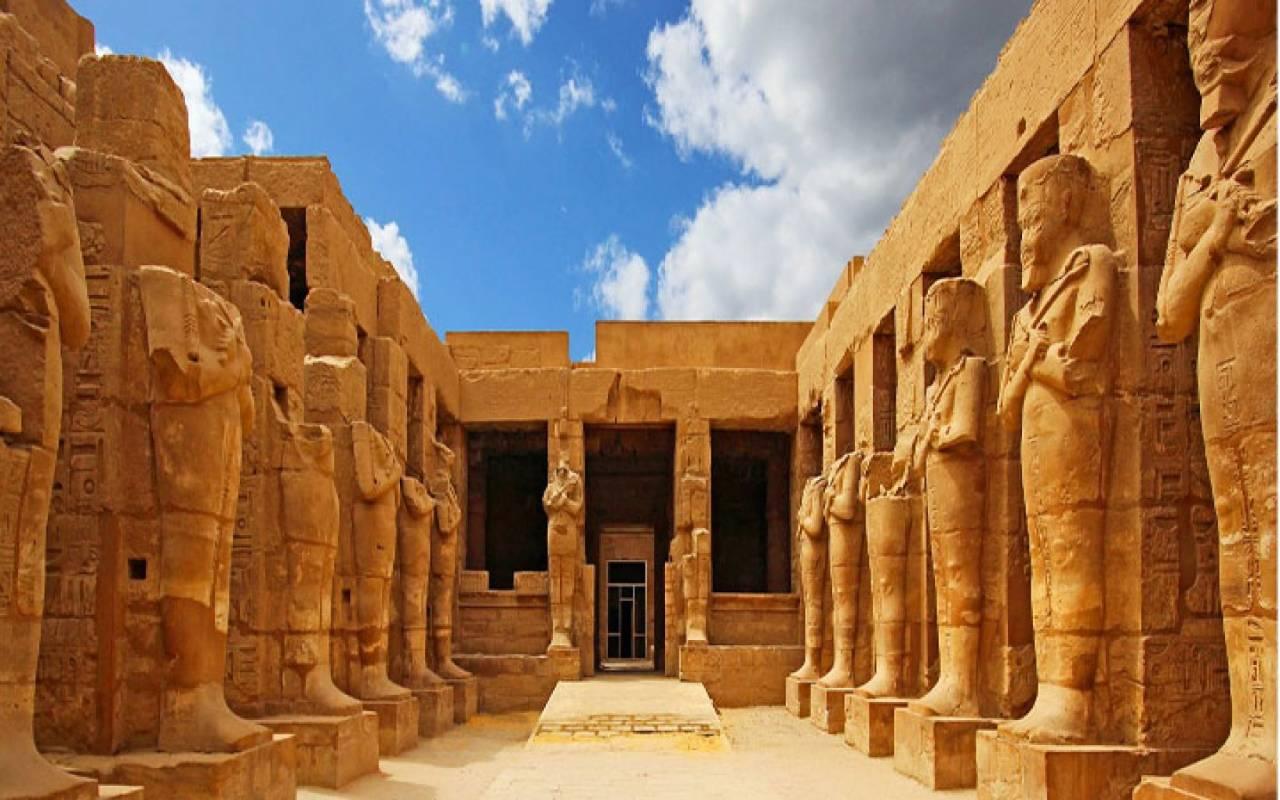
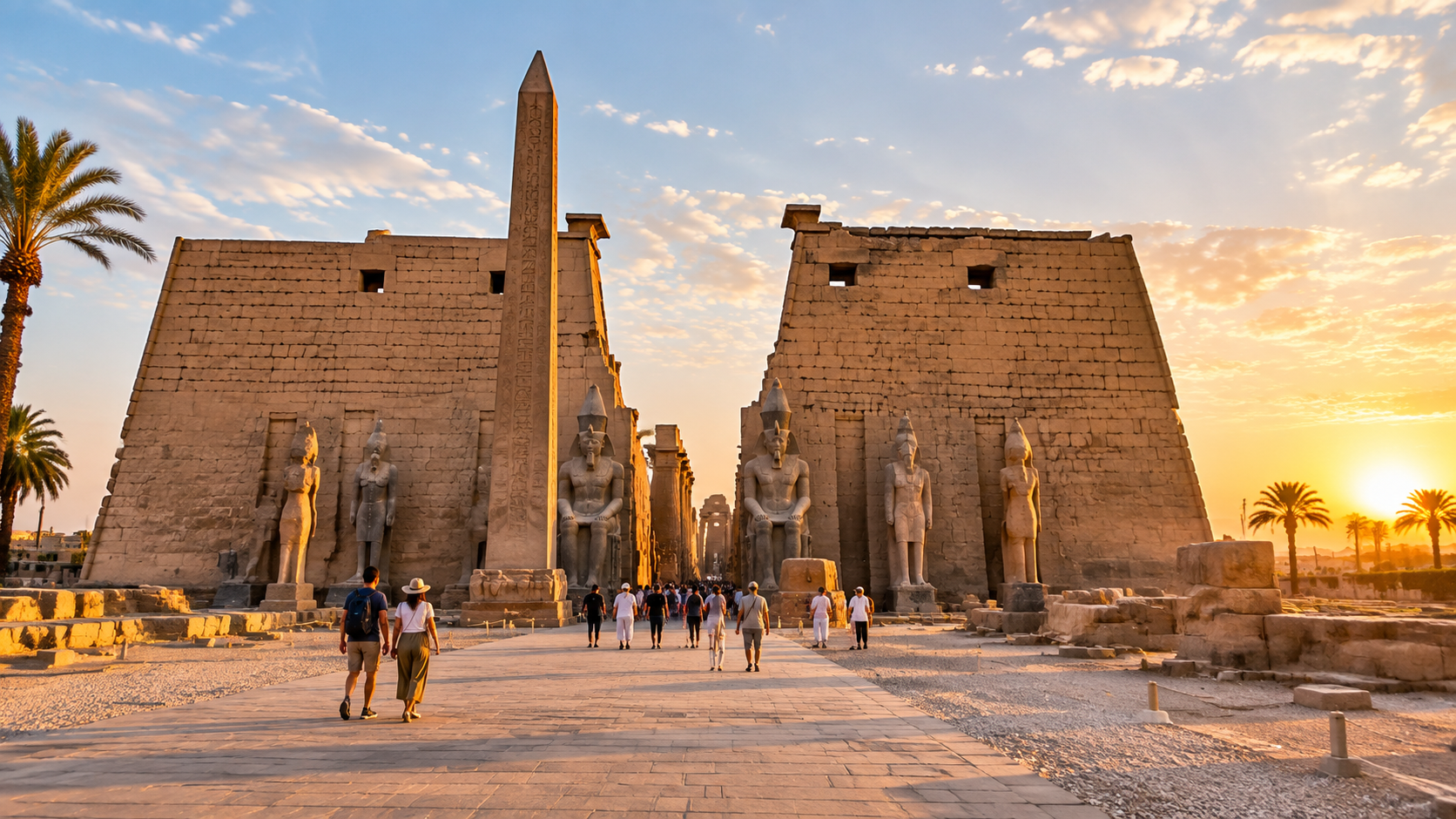
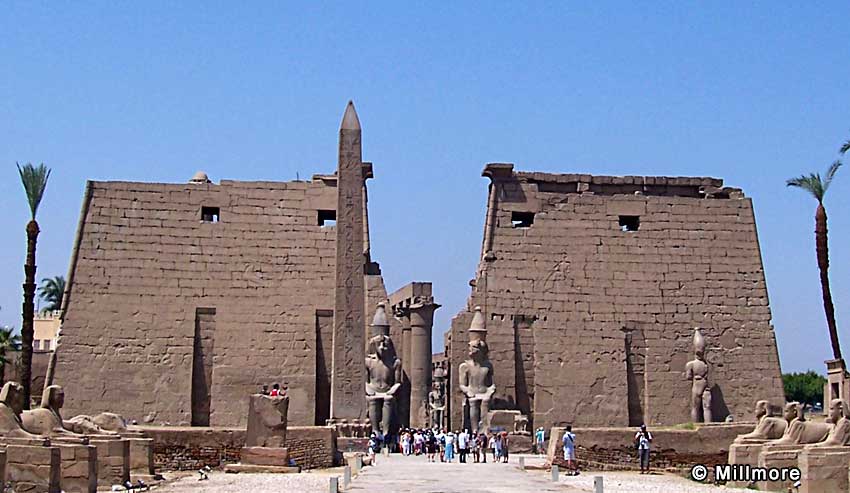
Position yourself near the massive entrance statues to frame the colossal statues and obelisks against the sky during your day trip to luxor from cairo. The sheer size of the gateway provides a symmetrical composition.
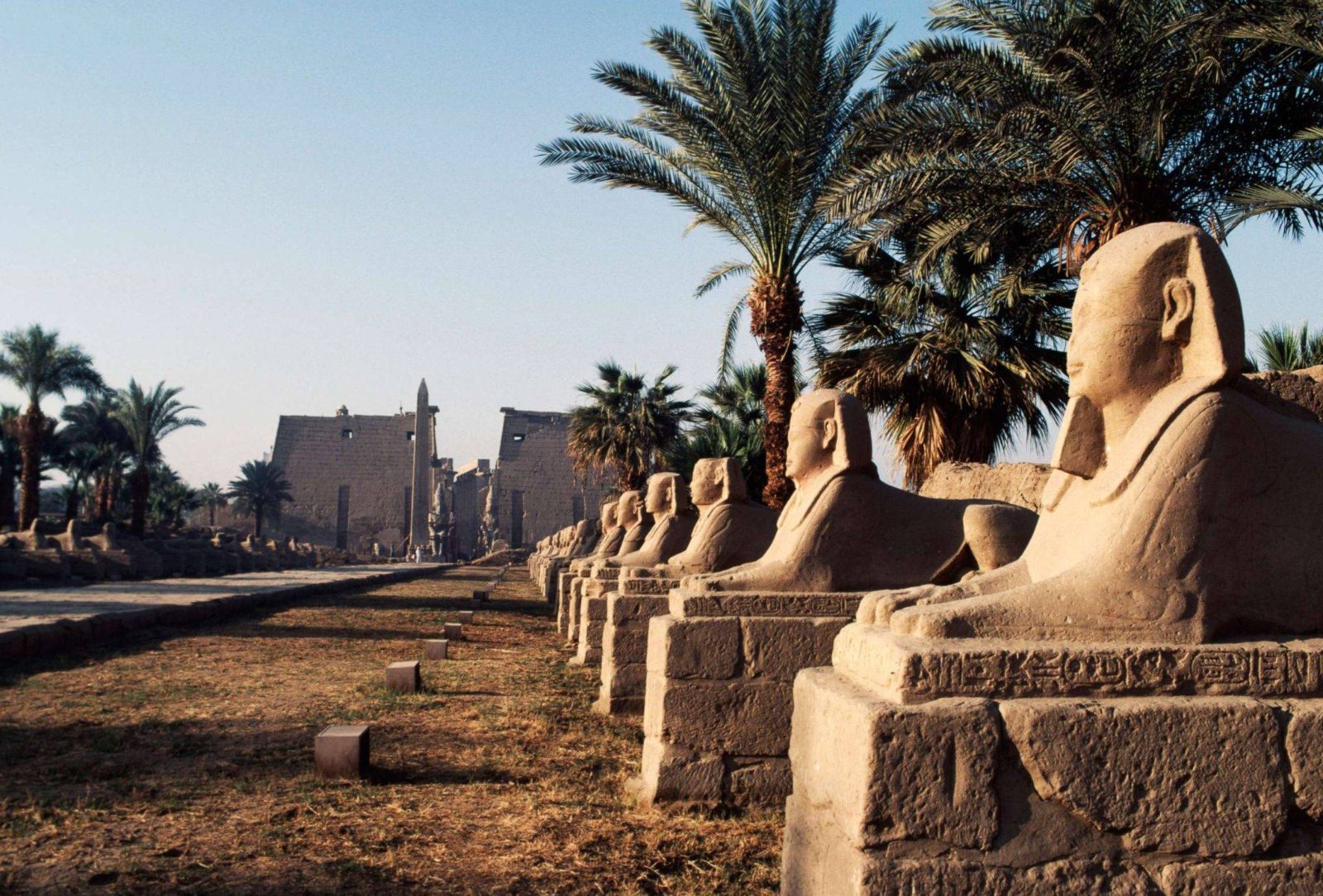
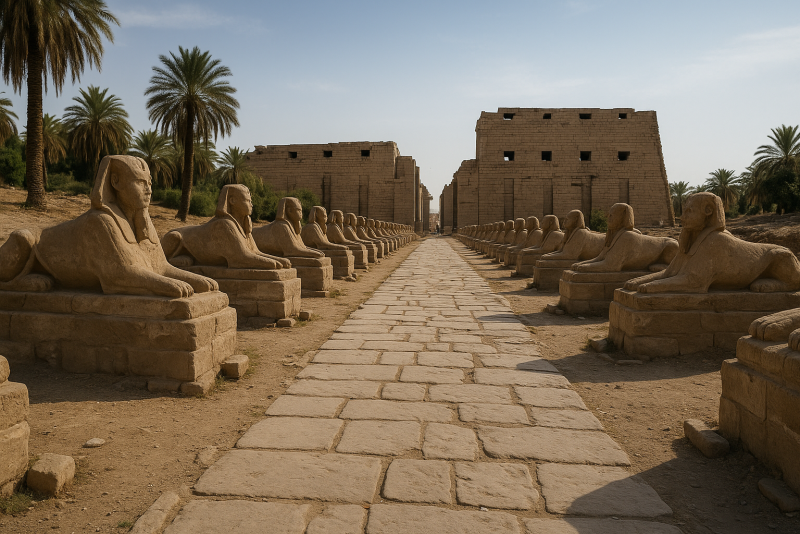
Walk along the restored stone path connecting the temples to capture the long line of carved figures stretching toward the horizon. This corridor highlights the ancient ceremonial route that remains a staple of many day trip to luxor from cairo tours.
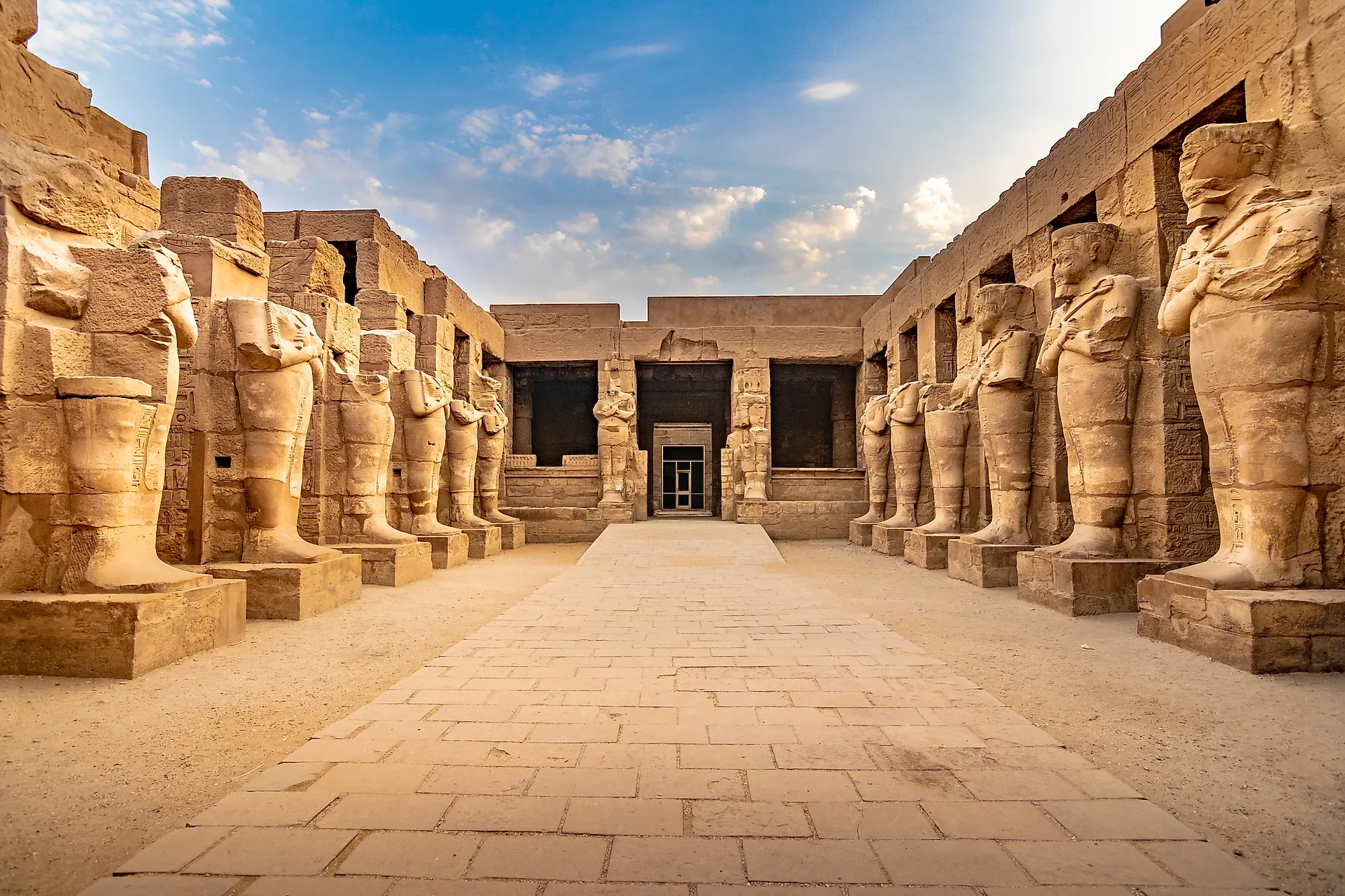
Capture the rhythmic sequence of towering columns in the court of Amenhotep III from the center of the open courtyard. This spot is essential for those seeking depth and vertical lines in their day trip to luxor from cairo tickets-linked photography.
Real experiences from real travelers
The flight from Cairo leaves before dawn but landing in Luxor by mid-morning gave us the full day. Our guide walked us through Karnak Temple explaining the symbolism in each hall. The scale of the hypostyle columns is difficult to grasp until you stand beneath them. Valley of the Kings felt more intimate than expected, with tomb paintings still showing vivid blues and golds.
This day trip to Luxor from Cairo covered both banks of the Nile efficiently. We started at the Valley of the Kings where three tombs were open, each with different decorative styles. Hatshepsut Temple's terraces against the cliff face made for striking photographs. The Colossi of Memnon stop was brief but our guide shared the history of the singing statues. Lunch by the Nile before visiting Karnak gave us energy for the afternoon.
Luxor Temple at sunset was the highlight of our Cairo to Luxor excursion. The avenue of sphinxes leads directly to the first pylon where the remaining obelisk stands. Inside, the mosque built into the Roman ruins shows layers of history. Our Egyptologist guide pointed out cartouches of different pharaohs who added to the complex. The day felt long but never rushed.
The domestic flight made this day trip to Luxor from Cairo feasible though we were tired by evening. Karnak's sacred lake and the festival hall sections were less crowded than the main hypostyle area. Valley of the Kings allows photography outside tombs but not inside. Our guide suggested we skip Medinat Habu to have more time at Karnak, which worked well. Bring a hat, the sun is intense even in May.
Our guide's knowledge of hieroglyphic grammar brought the temple walls to life during this Luxor day tour. At the Valley of the Kings she explained the Book of the Dead scenes in Ramesses IV's tomb. The small group size meant we could ask questions throughout. Hatshepsut's temple architecture blends into the cliffs intentionally. We finished at Luxor Temple where evening light painted the sandstone warm orange.
Flying from Cairo to Luxor early morning eliminated the long overland drive. We visited four major sites before the return flight at 6pm. The Valley of the Kings was cooler in March than summer months would be. Karnak Temple required two hours to see properly, with the ram-headed sphinx avenue and the sacred lake both worth the walk. Our guide coordinated entry tickets smoothly at each location.
This day trip to Luxor from Cairo offered more than just photo opportunities. At Karnak our guide discussed how the temple complex evolved over 2000 years under different dynasties. The alabaster chapel of Amenhotep I sits in the open air museum section. Valley of the Kings tombs vary in preservation, with some paint damage from humidity but others remarkably intact. The west bank landscape of agricultural fields against desert cliffs provides context for ancient Thebes.
The early start meant we reached Luxor before crowds built up. Valley of the Kings opens at 6am and we were among the first inside. Three tomb tickets are included with entry, we chose Ramesses III, Ramesses IX, and Merenptah based on our guide's recommendation. Karnak's precinct of Amun-Re is vast, the festival hall's botanical reliefs showed plants from foreign campaigns. Lunch near the Nile gave views of feluccas sailing past. Luxor Temple at day's end was less crowded.
A day trip to Luxor from Cairo packs in Egypt's greatest ancient sites efficiently. The domestic flight takes an hour versus an overnight train. We covered both the east and west banks with a local Egyptologist. Hatshepsut's mortuary temple has three colonnaded terraces, the upper one offers views across the valley. At Karnak the sound and light show equipment is visible but doesn't detract during daytime. The avenue connecting Karnak to Luxor Temple is being excavated and restored.
Flying to Luxor for the day let us focus entirely on antiquities without hotel changes. The tomb of Ramesses VI in the Valley of the Kings has an astronomical ceiling stretching the full corridor length. Karnak's hypostyle hall contains 134 columns, each covered in carved registers. Our guide pointed out where early explorers' graffiti mars some walls. Luxor Temple shows Greco-Roman modifications layered over pharaonic construction. The obelisk's twin stands in Paris, which our French guide mentioned with national pride.
Everything you need to know for your journey
The site is open daily from 06:00–19:00, providing ample time for your visit. Plan your arrival according to these times to make the most of your day trip to luxor from cairo.
Yes, the 500 EGP conservation fee per person is mandatory for all visitors to access the grounds. This fee supports the preservation of this historical site.
Yes, official tickets can often be secured via the official site or authorized providers. Ensure your day trip to luxor from cairo tickets are valid for the specific date of your visit.
Plan your day trip to luxor from cairo to arrive during the best arrival window of 06:00–18:00. Use sunscreen and seek shade to manage the intense desert heat.
Yes, modesty is required at all religious and historical sites in Luxor. Ensure your clothing covers shoulders and knees to remain respectful during your visit.
No, professional gear like tripods is prohibited without special permits. You may use handheld devices to capture photos during your day trip to luxor from cairo.
Yes, children are welcome to visit the site. Keep them close due to the vast, uneven terrain typical of any day trip to luxor from cairo.
Outside food is not permitted, but you may bring bottled water. Plan your meals before or after your visit to the Luxor landmark.
The distance varies, but most transit from the airport to the city takes about 20–30 minutes. Factor this into your overall day trip to luxor from cairo schedule.
An ancient road connecting two major religious centers with hundreds of sphinx statues.
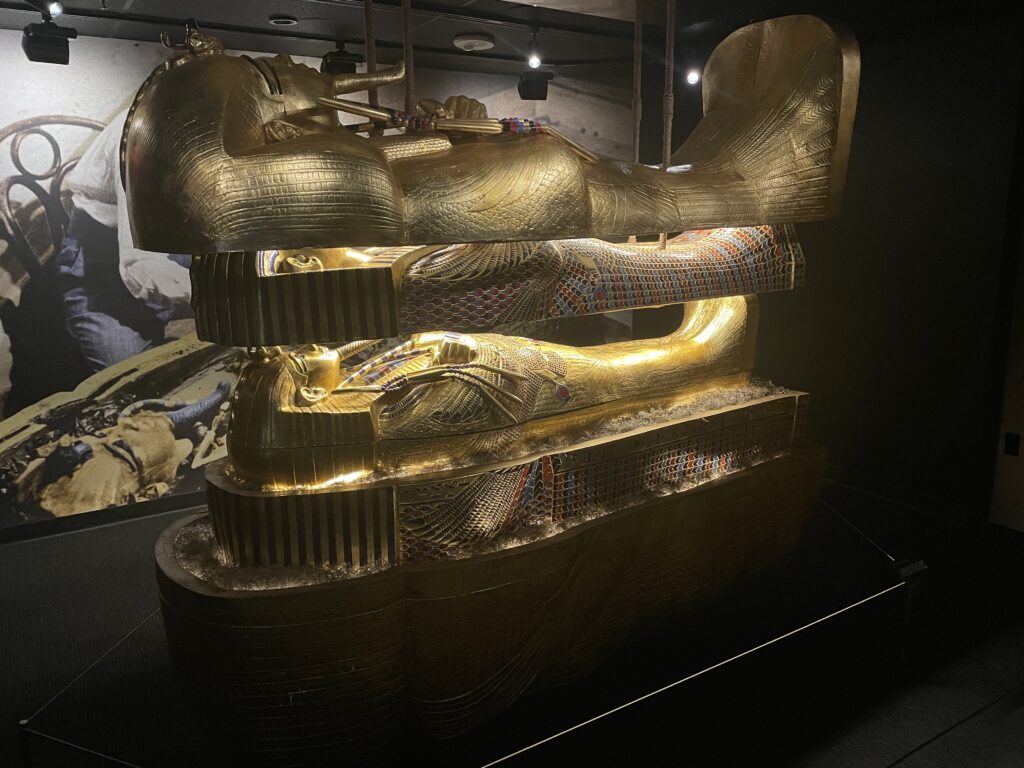
Displays a collection of antiquities including statues and funerary objects from the region.
A vast complex of temples and chapels reflecting centuries of royal construction.
Join thousands of happy travelers who have discovered this incredible experience
Book Your Experience Now